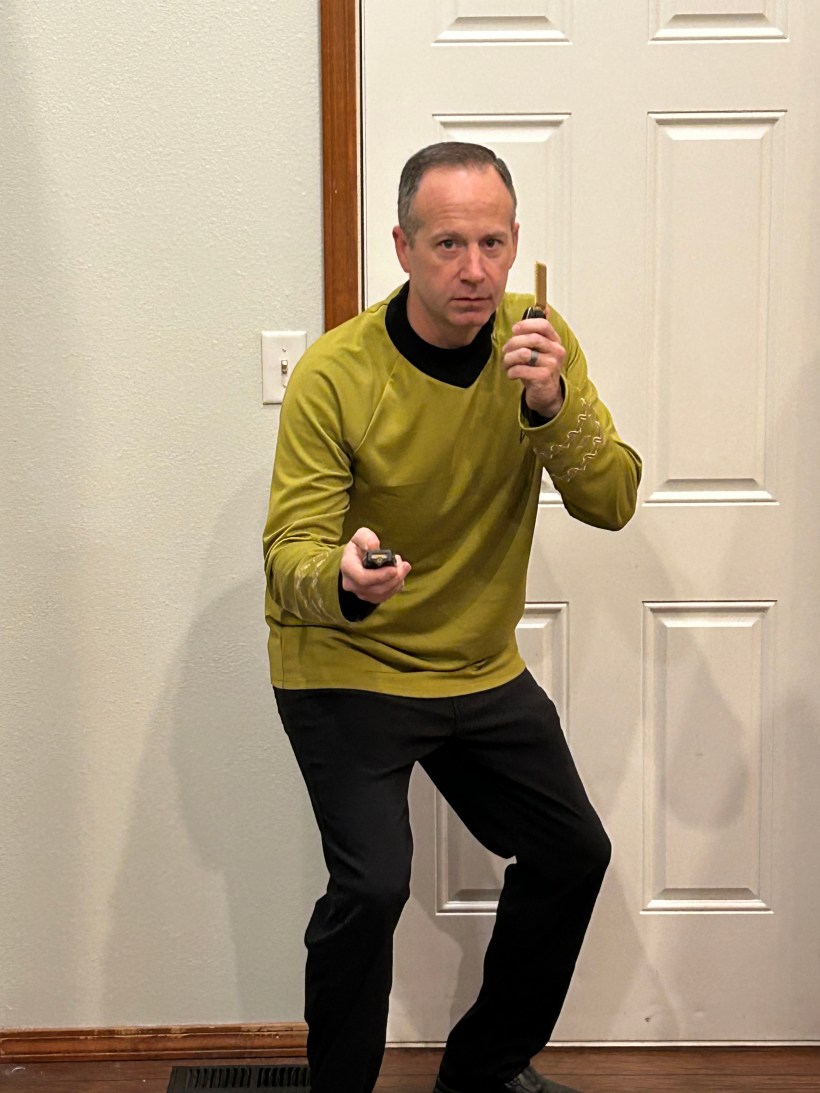
Boldly Part II

“Space: the final frontier. These are the voyages of the starship Enterprise. Its five-year mission: to explore strange new worlds, to seek out new life and new civilizations, to boldly go where no one has gone before.” (Opening line from Star Trek, created by Gene Roddenberry)

Most of us wouldn’t think of that monologue as therapy. But it might be closer than it seems.

In Acceptance and Commitment Therapy (ACT), one of the most central concepts is values—chosen directions that give shape to a life, even when the way forward is murky. Values aren’t goals you accomplish; they’re the compass, not the destination. You act toward them not because it’s easy or comfortable, but because they name something deeper: who you want to be, especially when clarity fails.

And that’s what strikes me now, listening again to that iconic voiceover. The mission of the Enterprise wasn’t about achieving a final victory. It was about remaining in motion, in purpose—committed to courageous exploration and discovery. Boldly going wasn’t a strategy. It was a stance.

So what happens when the voices on your own bridge don’t agree? When reason and emotion, caution and instinct, memory and longing pull in opposite directions? I used to think I had to resolve them. Now I’m more interested in commanding through them.

The bridge is never quiet.

Spock raises a brow, calculates. McCoy throws up his hands, protests. Sometimes they switch roles, just to confuse me. And Kirk—Kirk listens, then decides. Not always wisely. But always forward.

When I first saw that trio through a Jungian lens, I recognized them not just as characters, but as archetypes of my own inner life. Logic. Emotion. Will. Each with its own truth. Each demanding the chair. Jung called the process of learning to live with them individuation—becoming whole not by choosing one voice, but by letting them all speak, and still acting.

That’s where ACT sneaks in—practical, behavioral, even suspiciously unromantic. Where Jung swims in symbols, ACT asks:

What matters to you?

And what will you do about it, even if it’s hard?

It doesn’t demand that I silence the bridge. It just reminds me: I still have a heading. I still have a chair.

(Star Trek is a registered trademark of Paramount Global)
Boldly (Part One)

As a kid, I was drawn to Star Trek. Not just the spaceships or the futuristic settings, but the characters. Kirk, Spock, and McCoy weren’t just role models or even heroes to me—they represented something deeper. It wasn’t until much later that I realized how much they mirrored the different parts of myself, and how the dynamics between them played out in the internal dialogues I’d often find myself having.

Looking back, I can see how this early fascination with Star Trek laid the groundwork for something I would come to appreciate much more deeply as I grew older—Jungian psychology. At first, the depth of Jung’s ideas was daunting. It felt like something just out of reach—complex, multifaceted, and, at times, overwhelming. But as I started to grasp the idea of archetypes, I began to see how they weren’t just abstract concepts—they were alive in me, in the characters I loved, and in the conflicts I felt within myself. But there’s a catch: Jung often contradicts himself, or at least seems to. He writes in ways that can feel paradoxical—embracing the importance of both the conscious and unconscious, and sometimes leaning into opposing ideas. These contradictions are part of what makes Jung so fascinating, but also what makes him hard to fully understand. And as with most paradoxes, difficult to reconcile.

Spock’s cold logic, McCoy’s passionate empathy, and Kirk’s leadership—they weren’t just characters in a show; they were representations of these archetypal forces, all vying for attention and integration. Jung’s idea of individuation—the process of integrating these contrasting parts of the self—became something that resonated deeply. It was as if Star Trek had already shown me the way, even if I didn’t have the language for it at the time.

But here’s where it gets thorny: As much as Jung’s exploration of the psyche is fascinating, it’s easy to get lost in the weeds. One can spend endless time analyzing these archetypes, tracing their paths through the characters and our own lives, without ever really putting any of it into practice. And while introspection is important—vital, even—it’s never enough to simply explore for the sake of exploring. It’s in the doing, or the exploration of the external if you will, where real transformation happens.

And this is where the balance lies: Wonder, yes, but also action—something Star Trek also captures well. For all the self-reflection it’s important to remember that change, true transformation, requires more than just thought. Sometimes we act, and then learn, or even change, as a result of that action. The lessons from Star Trek, the insights from Jung—they aren’t meant to remain in the realm of theory. It’s imperative to live them, integrating them into the choices we make, relationships we build, and the actions we take.

On Natural Selection…. of Relationship

My mom and dad, while not perfect, largely found the balance of pushing me while also noticing my heart was truly breaking and, on occasion, tore new assholes in the people that caused it.

Ruby saw a passion and enforced it, or rather, fostered it.

Sharon started to help me realize that exuberance, while powerful, can hurt if used thoughtlessly.

Duffy and Devaunt pushed me to take more risk.

Gary unleashed a deeper exploration.

Cary taught me deeper exploration doesn’t exclude the having of a good time.

Richie showed me sometimes even close relationships need to end.

From Bonnie, I learned loyalty and disagreement aren’t mutually exclusive.

From Ryan, I learned closeness requires no words.

With Jana, my wife, there’s an entire book being written with at least four different marriages spanning 27 years, over half our lives, and full of… just full. She’s the only person who takes my ability to write punchy prose away, so I guess I’ll rip off a shitty Parachute song and say, “she is love.”

With Adam, I discovered people exist that pursue as hard, if not harder, than I do.

Roland reminded me passion could be shown publicly.

Bill was the first person to introduce the idea that truth matters little if I can’t answer two basic questions—so what, and what difference does this make?

Kevin, Tom, Ed, Michelle, Debbie, Kevin, Greg, Rachel, Ben, Brandy, Michelle, and Phil taught me sometimes friendships, even great ones, are episodic, and that’s okay.

My kids remind me there are still more gears I didn’t know were available.

Noelle guided me in the value of academic rigor.

Daisy taught me making repair matters more than making mistakes.

Justin affirmed that friendships can be forged even when the differences are significant

And Tom B., my bro date buddy, taught me that deep relationship can still happen later in life.

Finally, my patients remind me almost everyday that change is possible, even when it’s hard.

These are just a few of the people that come to mind when I think of lessons learned. The list grows longer when I consider who matters today and in episodes past. This isn’t, in the immediate, a gratitude list. It’s a brief record of those who’ve helped me adapt and survive, even though some parts of me didn’t, even though some of those relationships didn’t. But whether they continued, drifted, or passed they left something behind. I don’t have to hold onto it. I don’t have to throw it away. It just is.

Survival isn’t about keeping everything or cutting it all loose. It’s about knowing what to carry, what to leave, and what to nod at on the way out. And maybe relationships aren’t just proof that we don’t get here alone—they’re reminders that, for better or worse, we’ve never been unchanged.

Photo by Caleb Jones on Unsplash

The First One’s Free

The moment a baby is introduced to a new family, chaos ensues.  Sleeping, eating, pooping machines – babies throw what familial rhythms existed off kilter.  I do not specialize in child psychology and available material on parenting and child rearing is ubiquitous.  However, I will make an observation – all of the available modalities and theories share a common thread.  Each of them attempt to offer a system, a schedule, a routine – an attempt to bring order to chaos.

Indeed, most attempts to treat psychopathology in children and adolescence with talk therapy seek to replace chaotic patterns of attachment and behavior with something more consistent and dependable.  But here I am discussing children again when I’ve already disclosed they’re not a specialty.  What gives?

In 12+ years of adolescent and adult therapy there is a frequent lifestyle feature present irrespective of the stated reason an individual has entered therapy – their eating and sleeping schedule is irregular – sometimes more chaotic than a newborn baby!  Question?  How could a mind ever find ease if the body its attached to can’t depend on a regular and predictable sleep and eating schedule? 

Want an example from adulthood?  Let’s take grief.  One of the first moves in recovering from the grief (depression) of a significant loss is getting back into a regular rhythm of eating and sleeping. 

This might be the moment where someone begins pimping a lifestyle system where for the low, low, price of just $179.88 a month you can snort specially formulated lemon grass, use essential oil enemas, and eat designed meals to ease all manner of mental maladies.  Wouldn’t it be awesome if something like that actually worked?

No, all problems and disease don’t melt away when we eat and sleep on schedule.  And… 10-20% improvement can feel pretty darn neat.  Neat enough that tailspins maybe aren’t so deep.  Neat enough the medication you’re on becomes more effective.  Neat enough you don’t need a therapist for this moment… or at the very least – the first session isn’t spent discussing this 🙂

Wishing you well,

Ira

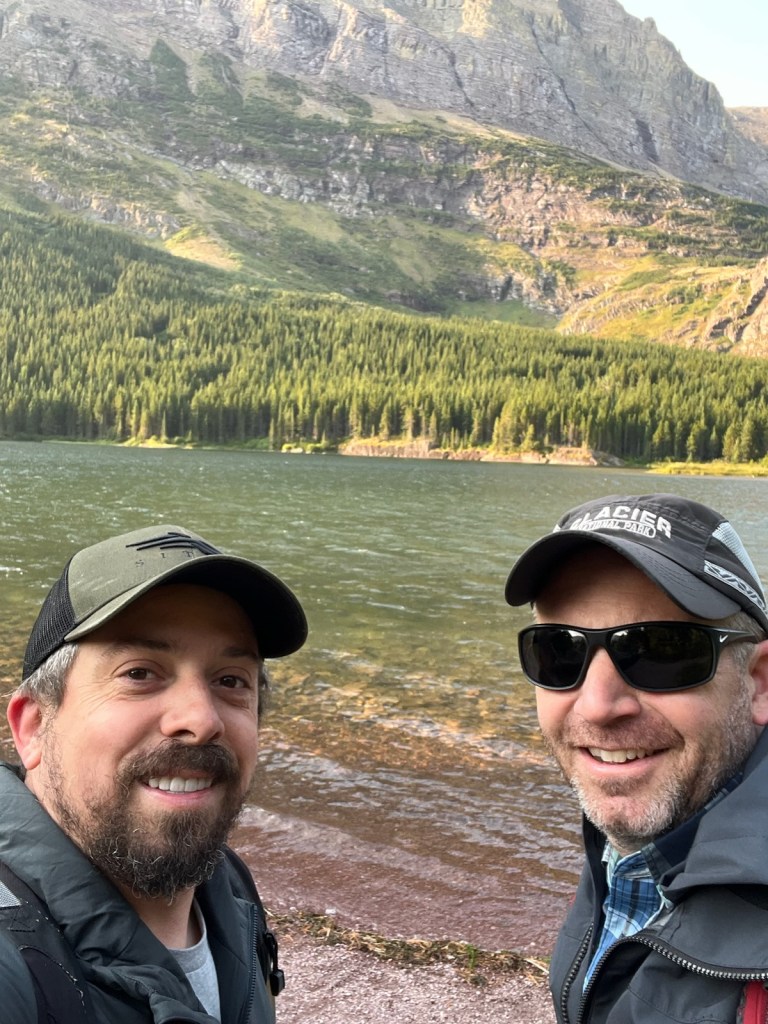
Glacier ’23

If memory serves, this was my 10th year in Glacier. Ten years ago, my brother decided to ride along with me to Hamilton, Montana, where I was scheduled to take my CDP license exam in a small airport hanger (that in itself is a separate, weird story). Anyway, on the way back, I badgered him into taking US Hwy 2 home to see more country…. And while we were at it, see if Glacier was all the hype.

Despite at least annual trips since then, circumstances have not allowed for a monster hike the last couple years. Last Thursday’s climb to Swift Current Pass and Granite Park Chalet served as the perfect capper to 10 years in what has become a very restorative place. Even better, it was spent with the man who “discovered” this sanctuary with me.

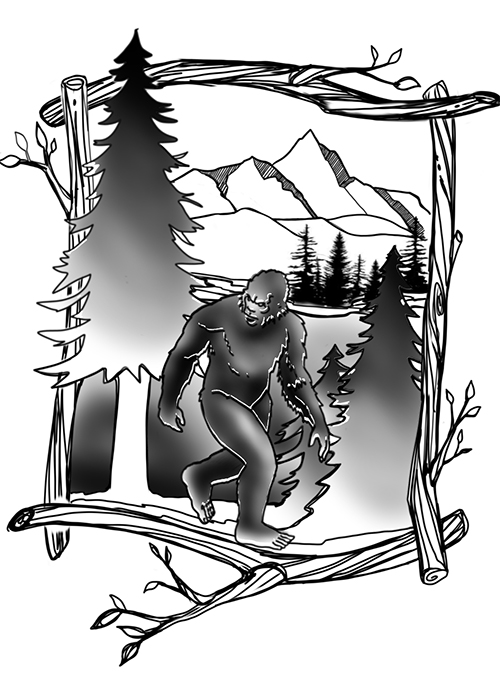
‘Squatch

Inspiration for this is post is from John Zada’s book, “In the Valley of the Noble Beyond: In Search of the Sasquatch.”

In the latter half of life I became fascinated with Sasquatch – and in more recent years perhaps even developed a gentle belief.  Seems if a new, formerly-considered-mythical bovine can be discovered in 2009, then Big Foot’s existence is not so far-fetched.

But it’s not quite a belief.  There’s no need to convince others of its existence.   It’s simply nice to enjoy conversation with others who are open to wonder.  It’s more like something I want to be real.  Something that fills me with excitement, exhaustion, wonder, and fear when I hike into the forest.

Sasquatch’s ability to transcend is also enjoyable.  In a world that’s become incredibly unable to share space with people who think differently, ‘Squatch breaks through the divide.  While my evidence is only anecdotal, positions on God, climate, Covid, Trump, police, choice, guns and equality do not appear to be a predictor of whether one holds to the possible existence of Sassy.

Within this mythos, some Native Americans say that one’s experience during a sasquatch encounter depends entirely on the purity and balance of one’s psyche and soul.  At first blush, this may sound magical.  But really, it speaks to the important work and experiences each person has before they encounter something beyond them.  There’s an old marriage adage about “never going to bed angry.”  While I’m not sure how important that is, I do know a preference within me to be square in primary relationships before journeying into the wild.

Perhaps best – Bigfoot isn’t needy.  He’s not looking for me.  She doesn’t need to be seen.  For this last reason alone, I hope Sassy is never found.

Meandering Musings

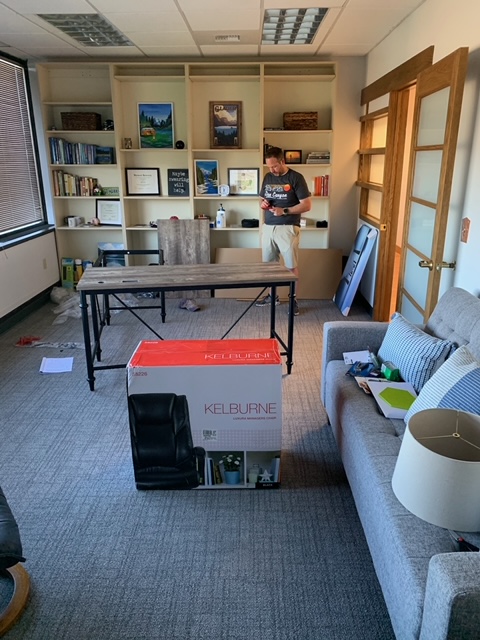
As the picture might suggest, I’m moving offices. Honestly, I haven’t fully processed everything that’s led to this moment. But for me anyway, it’s a big moment, so I want to mark this time with a few thoughts that are rattling around. In no particular order:

Sometimes things you don’t want work out well. I didn’t want to move – fought it even, for so many reasons. I loved where I as at. Loved the people. Loved my routine. The timing wasn’t good.

It’s possible to be very sad AND very happy at the same time. We get ourselves in the most trouble when we force ourselves to choose. AND is the mantra for the moment. Along these lines, it’s perfectly acceptable to be dismayed by the happenings around you AND enjoy your present circumstance.

Change is inevitable – embrace it.

It feels good when people celebrate for you… even when you’re not quite ready to do it yourself. To those who did – Thank you!

Dad

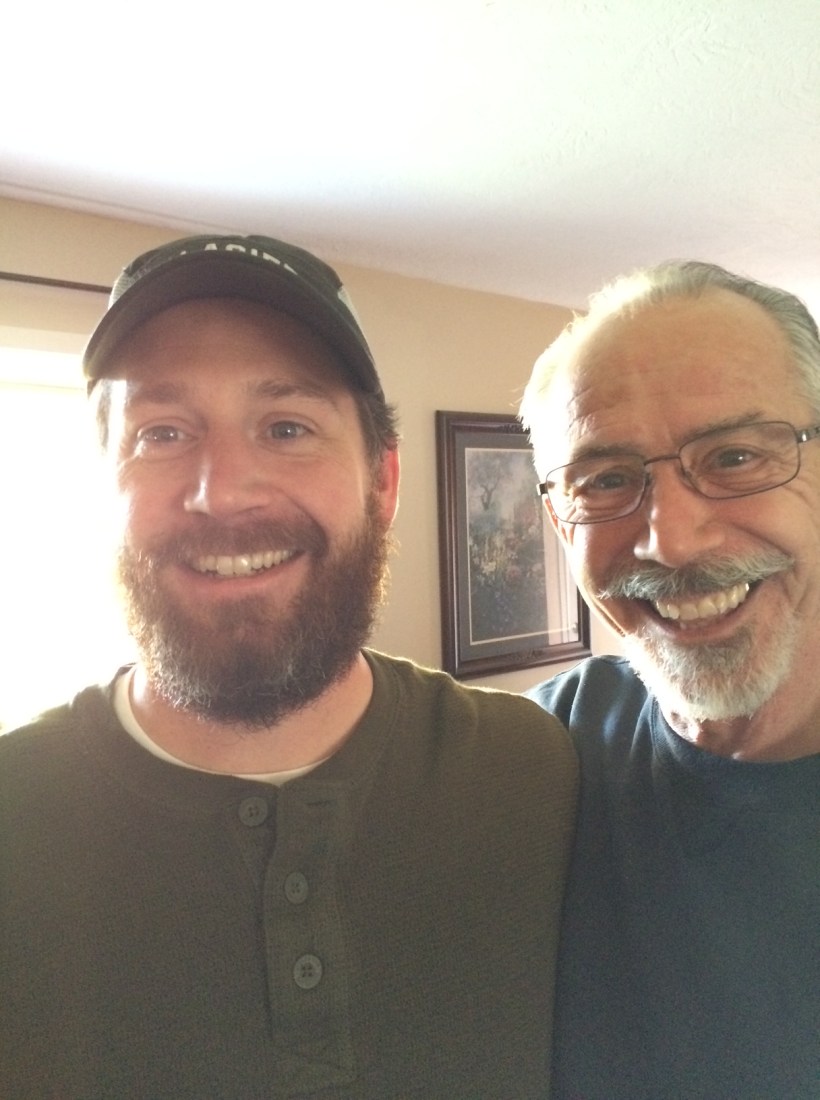
This photo is 7-8 years ago. But my dad got a kick out of the beard I grew back then so we’ll go with it.

My dad passed away last week. It was not unexpected and in many ways a relief. Lewy Body Dementia is a ravager and it did not spare him.

Lots has been written about the above and grief, so I won’t bother here other than to acknowledge the sadness of finality and the natural thoughts of one’s own mortality.

While I mourn the loss of him, as well as some of what he was never able to give me, I ultimately remember three favorite things.

  1. Favorite thing he provided. My dad suffered from an extremely neglectful upbringing which resulted in him essentially raising himself. As an adult, what he wanted most, was to create a permanent place where his family could be. He accomplished this. ‘Til the end, I never doubted I could crash at mom and dad’s place if it was ever needed. Several of my dad’s relatives benefitted from this as well. He never really had a home growing up – I did.
  2. Favorite thing he taught me. Dad always taught me to think for myself, think critically, and never hesitate to walk my own path. Now admittedly, this didn’t play out quite how he meant it. He said this repeatedly in regard to following a religion that was not mainstream. Nevertheless, the lesson continues to serve me well.
  3. Favorite memory. Growing up, I was a HUGE Boston Celtics fan and a Larry Bird nut. I’d get up early to read the recaps, track stats, build scrapbooks, the whole nine yards. My 6th grade year, it just so happened the Celtics were playing the Seattle Supersonics during Christmas Break. Even knowing we didn’t have a lot of money, I begged my dad, who also hated driving in big cities and driving through snow. He did it for me, complete with snow on the pass and twice getting utterly lost in the city. Larry Legend dropped 36 points and grabbed 10 rebounds that night while dropping his signature fade away on more than one occasion. The Celtics lost that night but you still couldn’t wipe the smile off my face.

Grateful,

Ira

Christmas Movies

Pursuant to the previous post, I’d rather argue about something that actually matters – a proper Christmas movie list.  Here are the top five:

5. Hallmark Christmas Movies – Yes, technically this is more than one movie in one slot, but it’s my list, so… there.  These things are great.  Two hours with commercials – like 75 minutes without.  Nice, easy to follow plot, which always include hot cocoa and a snowball fight.  Despite their obvious shortcomings, sometimes it’s just nice to go full-wholesome.  Special shoutout to Kristoffer Polaha, who became an inside/running joke between Jana and I, only to become a fan-favorite.

4. White Christmas –  Jana deserves credit for this movie’s inclusion as it was on her must-watch list prior to our marriage. Over the years, Danny Kaye started to slay me and the General’s surprise manages to make me misty-eyed.

3. Elf – My parents and in-laws wouldn’t make it 10 minutes through Anchorman or Step Brothers.  But they love this movie because Will Ferrell crrrrrrrrushes it.

2. Die Hard – There will be no debate here as to whether this is a Christmas movie.  Go educate yourself.  Anyway… This movie is NOT wholesome.  But it is so pure.  There are bad guys.  There’s a good guy.  The good guy wins.  One man can make a difference.  Explosions.  F-bombs.  Bad puns and tough guy lines.  This movie is most famously known for, “Yippee ki-yay motherfucker,” and that’s not even the movie’s best line.  Die Hard has brought Jana and I back together through dark times and today, is a right-of-passage when our children turn 13.

1. It’s A Wonderful Life – Words cannot express what this movie has meant to me over 45 years.  Too often, people jump to the end and miss how many difficult themes the movie addresses… without perfect resolution.  But it is hopeful and I’m all for that.  Special side note: “Welcome home Mr. Bailey” is the sexiest line and scene in a movie ever.

Happy Viewing!

Politics, Pandemics, and Showing Up

I’ve wanted to write something for several months about the fracturing of relationships over politics, pandemic protocols and the click-bait which exacerbates it.  However, the topic is enormous and I’ve just been too busy… showing up.  Showing up for Jana.  Showing up for my kids.  Showing up for my family.  Showing up for friends.  Showing up for my patients.  And they by and large, have shown up for me.

Perhaps a relationship does need to end because a person’s view is truly heinous, horrible, and incompatible with how you wish to live your life.  However… if this person showed up before the bullshit began… and if they continue to show up now… Maybe think twice before nuking the relationship over a team affiliation that essentially exists in the ether.  Those teams never show up.